



Japanese Boutique Business Name Ideas


Naming a Japanese Boutique: Culture, Craft, and Clarity
Using actual Japanese words is powerful when the meaning is intentional and the pronunciation is accessible to your audience. Misusing Japanese words — picking something that sounds pretty without understanding its meaning — is a fast way to lose credibility with customers who know the culture. The safest approach is to pick words with clear, beautiful meanings that fit your brand and are easy enough for non-Japanese speakers to remember.
Japanese Kimono Boutique Business Names
A kimono boutique carries centuries of Japanese craft tradition, so the name should feel both timeless and refined. The best names for this niche hint at fabric, ceremony, or cultural heritage without feeling stiff or inaccessible.
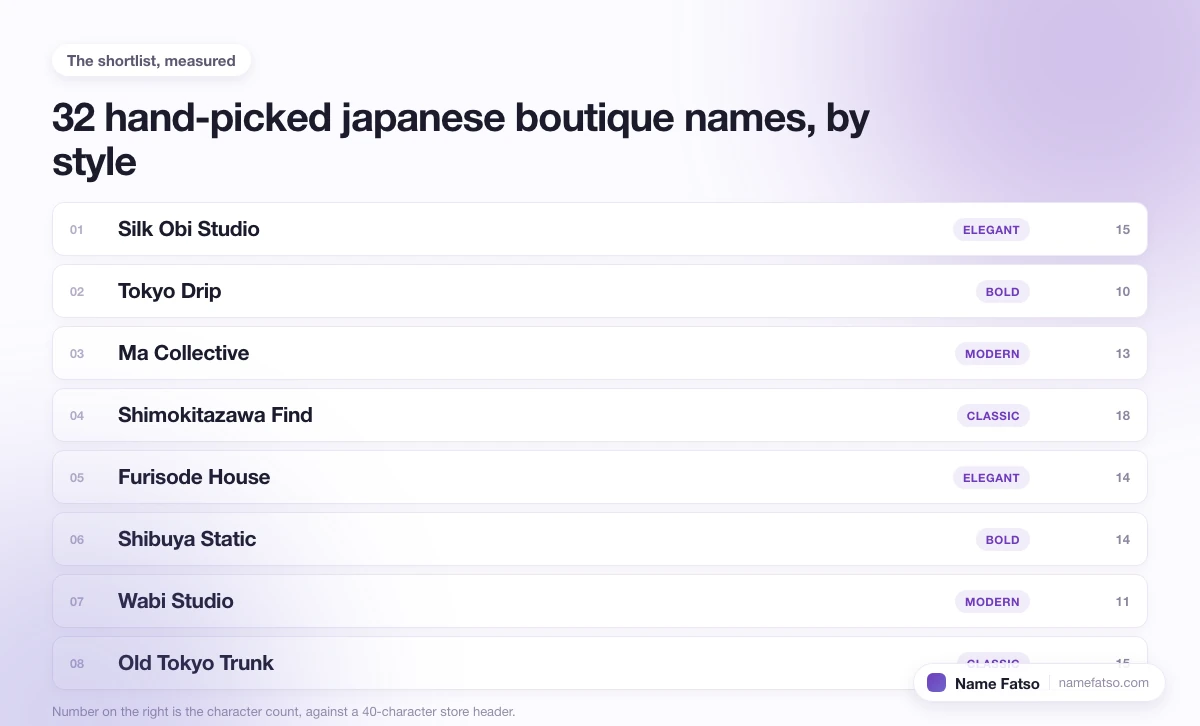
References the obi sash central to kimono dressing, immediately signaling authenticity to customers who know Japanese fashion.
Furisode is the formal long-sleeved kimono worn by unmarried women, making this name precise and appealing to bridal and coming-of-age shoppers.
Komon refers to all-over patterned kimono fabric, giving the name a knowledgeable, insider quality that attracts serious buyers.
Yuzen is the hand-dyeing technique behind many celebrated kimono designs, lending this name an artisan credibility that generic titles lack.
Haori jackets are having a fashion revival outside Japan, so this name positions the boutique at the crossroads of tradition and contemporary styling.
Pairing a French boutique word with shibori tie-dyeing signals luxury and cross-cultural appeal to fashion-forward shoppers.
Tsumugi is a handwoven silk fabric with a rustic texture, anchoring the brand in authentic Japanese textile craft.
Nishiki means brocade in Japanese and is associated with elaborate ceremonial textiles, making it an evocative name for a high-end kimono shop.
Japanese Streetwear Boutique Business Names
Japanese streetwear blends Harajuku energy, graphic culture, and a distinct sense of cool that Western brands rarely replicate. Names in this space should feel sharp, urban, and a little unexpected.
Drip is contemporary slang for stylish clothing, fused with a Tokyo reference to anchor the brand in Japanese street culture.
Shibuya's crossing and fashion district are globally recognized, and static suggests electric, chaotic energy that matches the streetwear aesthetic.
Ura means back street or underground in Japanese fashion slang, a nod to the influential ura-Harajuku scene of the 1990s.
Suggests playful misuse of Japanese script that is a recurring motif in streetwear graphics, appealing to collectors who appreciate the inside joke.
Evokes a city block address and the number-naming conventions common in Japanese streetwear brands, feeling authentic rather than fabricated.
Concrete and urban grit are visual hallmarks of Japanese street photography and lookbooks, making this name visually resonant with the target audience.
Koenji is Tokyo's bohemian thrift and subculture district, signaling the kind of underground credibility that streetwear buyers respect.
Yoyogi Park was where Tokyo's rockabilly and cosplay street fashion scenes took root, giving this name genuine cultural backstory.
Japanese Minimalist Fashion Boutique Business Names
Japanese minimalism in fashion is rooted in designers like Issey Miyake and Yohji Yamamoto, prioritizing silhouette, negative space, and quality over decoration. A name for this niche should be spare and considered, just like the clothes.
Ma is the Japanese concept of meaningful negative space and pause, a perfect conceptual anchor for a minimalist clothing brand.
Wabi refers to the beauty found in imperfection and simplicity, directly expressing the aesthetic philosophy behind Japanese minimalist design.
Wa means harmony in Japanese, and pairing it with Form signals a brand dedicated to clean, balanced garment construction.
Shiro means white in Japanese, evoking blank canvas aesthetics and the neutral palettes that define minimalist Japanese wardrobes.
Kyoto is associated with restrained elegance and ancient taste, making this pairing a natural fit for understated, considered clothing.
Kanso is one of the seven Zen principles of aesthetics, meaning simplicity and the elimination of clutter, ideal for a pared-back fashion brand.
Seido means precision in Japanese, suggesting garments built on exact construction rather than trend-chasing, which attracts quality-conscious shoppers.
Noh theatre costumes are known for their sculptural, draped simplicity, giving this name a deep cultural reference that fashion insiders will appreciate.
Japanese Vintage Boutique Business Names
Japan has one of the world's most respected vintage fashion markets, with shops in Shimokitazawa and Osaka drawing collectors from across the globe. Names for this niche should suggest discovery, heritage, and an expert eye for rare pieces.
Shimokitazawa is Tokyo's most celebrated vintage shopping district, and Find suggests the thrill of uncovering a rare piece, which is exactly what vintage buyers seek.
Trunk evokes an actual storage chest of treasures, and Old Tokyo conjures the nostalgic imagery of postwar Japanese fashion history.
The Showa era produced Japan's most collectible vintage clothing, and Archive signals a curated, serious approach to sourcing.
The tanuki is a beloved Japanese folklore figure associated with good luck and transformation, giving this vintage shop a playful but culturally rooted identity.
Boro is the Japanese tradition of patching and repairing worn textiles, a concept now celebrated by vintage collectors worldwide as wearable art.
The Meiji period marked Japan's first encounter with Western dress, making it a historically rich reference point for a boutique specializing in early Japanese-Western hybrid pieces.
Direct and descriptive, this name signals accessibility and the authentic hunting experience that draws vintage shoppers back repeatedly.
Sodeura means the underside of a sleeve, a term used in kimono repair and vintage textile appraisal, marking the brand as knowledgeable for serious collectors.
More Japanese Boutique Business Names
- Obi Ridge House
- FurisodeHouse Circle
- ForgeCherry Studio
- IronObi Atelier
- Sakura & Hanami Atelier
- Petal Hanami House
- Silken Hanami Studio
- CrestCherry Atelier
- TokyoOrigami Studio
- Kimono Crest Circle
- Gold Silk Studio
- BranchKimono House
- NativeObi Atelier
- CrestSakura Studio
- Northern Hanami Atelier
- HonestFurisode House
- GroveOrigami House
- Silk & Cherry Circle
- KnollKomon House
- StreamOrigami House
- FieldSilk House
- WildCherry Atelier
- HanamiFurisode Atelier
- PathOrigami Circle
- KnollObi Circle
- Obi Harbor House
- Silk & Wabi House
- Kyoto Origami House
- KyotoKimono Atelier
- RidgeObi Circle
- BendKimono Studio
- StreamSakura Studio
- Cherry Ridge House
- Sakura & Hanami House
- Quiet Cherry Studio
- OpenHanami Circle
- TokyoKimono Atelier
- Northern Cherry Studio
- TokyoKomon Circle
- KyotoOrigami Studio
- Silk Trail House
- NativeKimono Atelier
- Origami Knoll Atelier
- IronCherry Atelier
- Native Silk Atelier
- Obi Stream Atelier
- GoldObi Atelier
- FieldSilk Atelier
- CrispFurisode House
- BoldKimono Atelier
- Tokyo Obi Circle
- CrownObi House
- OpenWabi Atelier
- Native Komon Circle
- CrownKimono House
- Wild Kimono Studio
- BoldSakura Studio
- Kimono & Hanami Atelier
- NativeFurisode Studio
- KnollHanami Atelier
- Sakura Origami Studio
- NorthKomon House
- Silken Kimono House
- Heritage Hanami Atelier
- Wabi & Origami House
- CrispKomon Circle
- Northern Wabi House
- Soft Origami House
- Crisp Wabi House
- Stone Sakura House
- Komon Path Circle
- Hanami Furisode Studio
- Wild Furisode House
- Pure Sakura Circle
- Wild Wabi Atelier
- HonestSakura House
- Silk Ridge Studio
- BrookKimono House
- Iron Wabi Atelier
- Gold Komon Studio
- Sakura Obi Atelier
- Kimono Crown Atelier
- Kimono & Wabi House
- Silk Trail Circle
- Komon & Cherry Circle
- Edo Hanami Circle
- Cherry Stead Atelier
- Silken Cherry Studio
- Wild Origami Circle
- Tokyo Kimono Circle
- StreamOrigami Circle
- KnollSilk House
- HollowObi Studio
- Cherry Ridge Studio
- Stone Hanami House
- ForgeOrigami Studio
- Bold Kimono Studio
- CrispKomon Studio
- Edo Cherry Circle
- NativeHanami Circle
- Obi Crown Atelier
- StoneKomon House
- Honest Wabi Circle
- BranchSilk House
- Obi & Origami Circle
- CrownCherry Atelier
- TrueSilk House
- Native Obi Studio
- Stone Origami House
- HonestOrigami Atelier
- Hanami Harbor House
- Kimono Gate Studio
- Tokyo Silk Atelier
- Komon Branch Circle
- GroveKimono House
- KnollKomon Atelier
- TrueSilk Studio
- KyotoFurisode Circle
- Pure Sakura Atelier
- Furisode Brook Studio
- Silk Hollow Studio
- Wabi North House
- FieldObi Circle
- Hanami Origami Atelier
- Wabi Ridge House
- Quiet Origami House
- Origami North Circle
- Silk Forge Atelier
- Sakura Harbor House
- WildKimono Circle
- Heritage Obi Circle
- ForgeObi House
- Wild Hanami Circle
- WildKomon Studio
- Komon Bend Circle
- NorthCherry House
- HanamiKimono Circle
- Cherry Trail Atelier
- Komon Path House
- IronHanami Circle
- GroveKimono Atelier
- Honest Cherry Studio
- Tokyo Wabi Studio
- Hanami Sakura Atelier
- Silk Grove Atelier
- TokyoSilk House
- Sakura Crown Circle
- Hanami Bend Atelier
- CrestKimono Circle
- Kimono Knoll Circle
- CrownHanami Studio
- GroveHanami Circle
- Furisode & Wabi Circle
- Kimono Bend Studio
- OpenHanami Atelier
- Crisp Kimono Studio
- EdoSilk Studio
- Kimono & Origami Studio
- Kimono Field Circle
- NativeWabi Atelier
- Iron Wabi Circle
- CrownObi Atelier
- Obi Gate Studio
- Sakura Stream Atelier
- Silk Field House
- Fine Sakura Circle
- Furisode Grove House
- Komon & Hanami Circle
How to Name a Japanese-Inspired Boutique
Know what your Japanese word means
Before using any Japanese word in your name, verify the meaning with a native speaker or trusted source. A word that sounds elegant can carry unintended meanings.
Test pronunciation with your audience
If your customers are primarily English speakers, check that your Japanese name is easy enough to say and remember. A name nobody can pronounce won't spread by word of mouth.
Consider the aesthetic you're projecting
Japanese brand aesthetics range from minimalist and neutral to kawaii and colorful. Your name should match the visual identity you're building, not contradict it.
Use English if you want reach
Some of the best Japanese-inspired boutiques use English names that evoke Japanese values (simplicity, craft, nature) without using Japanese words. This removes pronunciation barriers.
Avoid overused Japanese words
Sakura, zen, and koi have been used so many times they've lost specificity. If you want a Japanese word, go one layer deeper — look at words that describe a specific feeling or craft concept.
Check trademark and domain
Japanese-inspired boutique names have become popular globally. Do a trademark search before committing, especially if you plan to sell internationally.
Japanese Boutique Name Examples: Strong vs. Weak
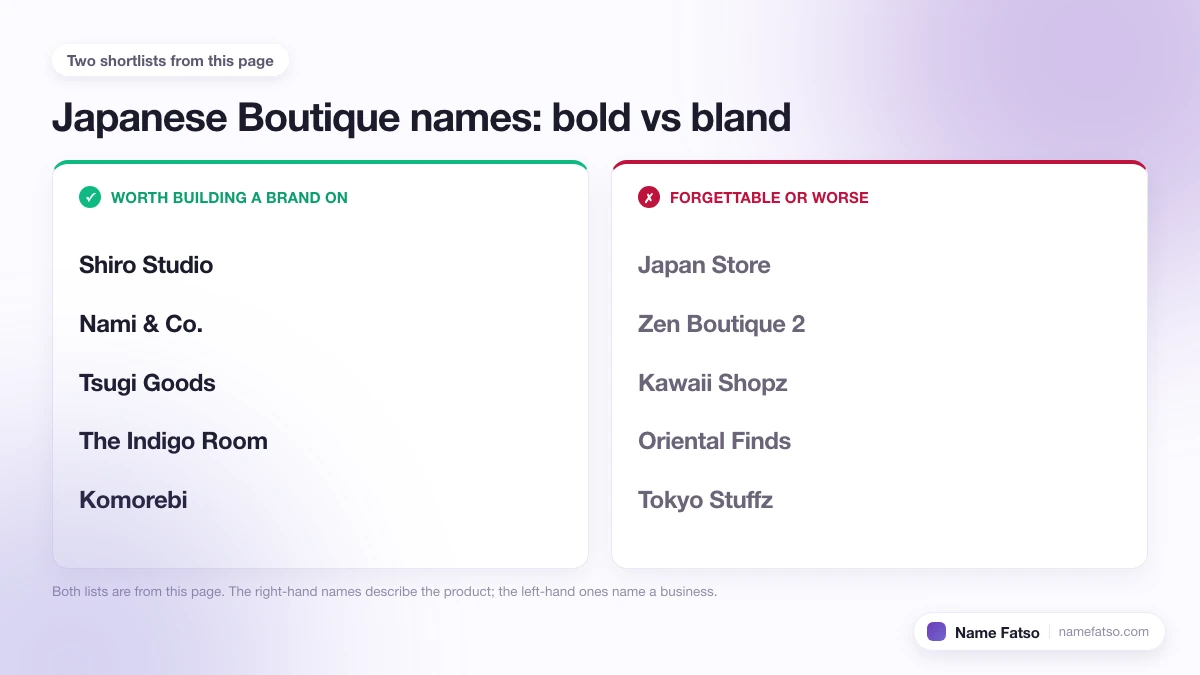
These examples show the range between names that feel authentic and names that feel like a costume.
- Shiro Studio
- Nami & Co.
- Tsugi Goods
- The Indigo Room
- Komorebi
- Hana Workshop
- Japan Store
- Zen Boutique 2
- Kawaii Shopz
- Oriental Finds
- Tokyo Stuffz
- The Japanese Things Shop
Start Your Store Today
Once you've found the perfect name, launch your store with one of these trusted platforms: