



Bedsheet Business Name Ideas


What a Bedsheet Name Has to Survive Before You Like It
Four things then narrow the choice far more than taste does. Fibre words carry legal weight: Supima and TENCEL are licensed marks, Egyptian cotton is a testable claim, and United States labelling rules require fibre percentages, country of origin and a company name or registered number on the label right beside your brand. Weave decides the buyer, because percale is crisp and cool and sateen is smooth and warmer, and a name leaning on silk or satin picks one of those two audiences for you. Thread count numbers date a brand and invite an argument buyers already distrust. And almost every bedding seller widens into duvet covers, curtains and towels, so the word sheets in a legal name is a ceiling you will pay to remove.
What Separates a Bedsheet Name That Lasts
Matches the Weave on Your Shelf
Percale buyers and sateen buyers want opposite things, crisp and cool against smooth and warm. A name that signals one of them is working for you if you stock it and against you if you do not. Keep the brand neutral when you carry both and let the range names do the signalling.
Claims Only What the Label Can Prove
Supima and TENCEL need a licence. Egyptian cotton is a testable claim with a well known enforcement history behind it. Your name sits on the same label as the fibre percentages and the country of origin, so anything it asserts is read against those two lines.
Works on an Invoice and on Packaging
A wholesale buyer is judging whether to open an account, so a trading name reassures. A retail buyer is choosing something for their own bed and the same name feels industrial. Know which of the two you are naming, or register one of each and use them deliberately.
Survives Towels, Curtains and Duvet Covers
Bedding sellers widen into home textiles fast, because the supplier and the buyer are already there. A name built on the word sheets needs a rebrand at exactly the point a rebrand costs the most, once there are repeat buyers who know you by it.
Does Not Promise a Fit You Cannot Keep
Fit causes more returns than feel, and pocket depths run from twelve to eighteen inches while India sizes in inches and the United States sizes by name. A name promising a perfect fit has to be true across every size you list, so claim it only if your cut really is deeper.
Stays Legible at Thumbnail Size
It is read in a brand field next to size and colour text, and printed small on a poly bag seen through plastic. Three words and about twenty characters is where names stop being cut off, and a name nobody can read is a name nobody searches for later.
Bedsheet Names That Work on a Wholesale Order Book
For sellers whose buyers are shops. Every one of these reads as a firm rather than a mood, because the person on the other side is deciding whether you are worth an account and a repeat order.
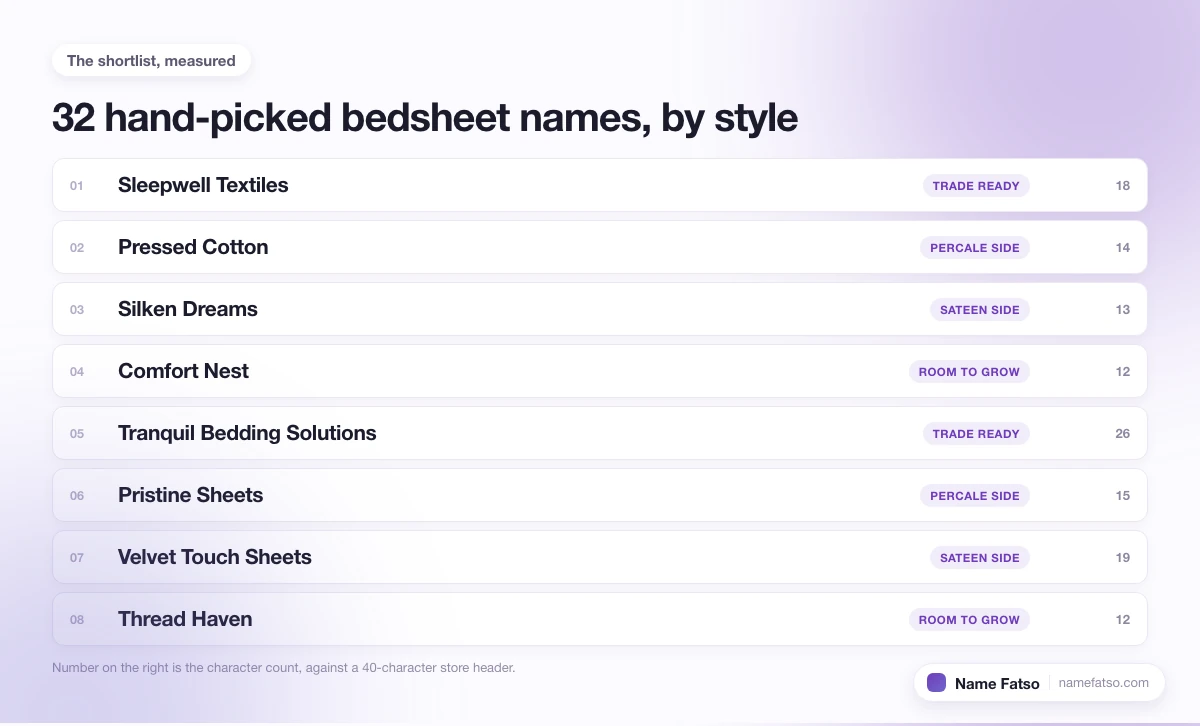
Textiles says you can supply more than sheets, which is the first thing a shopkeeper filling a mixed order wants to know.
Reads like a supplier rather than a shop, and Bedding keeps the door open to duvet covers, comforters and pillow covers.
Old fashioned on purpose, which is useful in a trade where looking long established gets your calls returned.
An invented place word and a trade word, so it sounds like a mill without claiming to be one on paper.
Settled and neutral, and it claims nothing about fibre or origin that a label would have to support.
Use this only if you actually weave or have a converting unit, because Mills is a claim buyers will check.
Trading Co is honest about what most of the Panipat market really is, a buyer and reseller rather than a factory.
Home Textiles is the phrase retailers themselves use for the category, so it files you correctly in their head.
Names That Suit a Crisp, Cool Cotton Sheet
Percale is the plain one over one weave: matte, breathable, bought by people who sleep hot and dislike anything shiny. These names set that expectation before the buyer reads a single specification.
Says cotton and says crisp in two words, and the ironing image is exactly what percale buyers are after.
Clean and matte rather than glossy, and it avoids the Linens trap while still sounding considered.
Sells the feeling of the bed rather than the fabric, and crisp is the single word percale shoppers search with.
Borrows the line dried association, which reads cool and airy, the opposite of the warm sateen end of the market.
Names the actual structure, so a buyer who knows what they want recognises you immediately.
Calm rather than luxurious, which fits a plain weave range and stays believable at a mid price.
Short, two syllables, and it puts temperature in the name without promising a technology you would have to prove.
Breathability is the one benefit percale genuinely owns, and naming it saves you explaining it in every listing.
Names That Suit a Smooth, Warmer Sheet
Sateen is woven one over three, which is where the sheen and the softness come from. Worth remembering that sateen is a weave and not silk, so these names should suggest the feel without claiming a fibre you do not sell.
Silken describes a feel rather than a fibre, which keeps it honest on a cotton sateen label.
Touch does the work here. It promises how the sheet feels in the hand without naming a cloth you are not selling.
Names the weave outright, which is unusual and useful, because sateen shoppers know the word and search it.
Plush reads warm and heavy, so it filters out the hot sleepers who would have returned the sheet anyway.
Carries a premium tone without an origin or fibre claim, which matters once the label is printed.
Two soft words that say smooth and say bedtime, and it survives being read off a small pack.
Fashion led rather than textile led, which suits printed and coloured ranges aimed at younger buyers.
Comforts stretches to comforters, quilts and pillows, so the name grows with the range rather than against it.
Names That Still Fit When You Add Towels and Curtains
Nearly every bedding seller widens into home textiles within a couple of seasons, because it is the same supplier and the same buyer. These names were chosen because none of them has the word sheets holding it down.
Names the bed as a place rather than a product, so towels, cushion covers and curtains all sit under it.
Thread covers every textile in the house, and Haven keeps the warm tone that sells bedding.
Broad enough for blankets and throws, and short enough to survive a marketplace brand field.
Anchored to sleep rather than to sheets, which lets you add duvets and pillows without a second thought.
Works for bath as easily as bed, which is where most bedding sellers go next.
Describes a room, and a room eventually contains curtains, rugs and cushion covers as well as a bed.
Two short words, easy to say and spell, and tied to a habit rather than to any one product.
Soft and memorable for direct selling, and nothing in it limits you to one item or one fibre.
More Bedsheet Business Name Ideas
- CozyDreams Beddings
- SleepSerenity Linens
- LuxeLinen Beddings
- DreamDrape Linens
- HeavenlyHues Beddings
- SilkSense Sheets
- SereneSlumber Linens
- CloudComfort Beddings
- BedBliss Linens
- EleganceEtc Beddings
- SoftSnuggle Sheets
- Dreamweave Linens
- RestfulRetreat Beddings
- PureComfort Sheets
- BedBoutique Linens
- SerenitySheets Beddings
- ComfortCoast Linens
- SilkSerenade Beddings
- SlumberStyle Linens
- DreamDelight Sheets
- TranquilTides Beddings
- BedBreeze Linens
- CozyCotton Sheets
- EliteElegance Beddings
- SleepSwan Linens
- Dream Weavers Linens
- Heavenly Beddings
- Cozy Comforts Sheets
- Luxe Linens
- Serenity Sheets
- Silken Dreams
- Bedtime Bliss Linens
- Sleep Haven Linens
- Velvet Touch Sheets
- Pristine Linens
- Cloud Nine Beddings
- Tranquil Threads
- Soft Touch Sheets
- Gentle Slumber Linens
- Pure Elegance Beddings
- Serene Slumbers
- Blissful Beddings
- Empyrean Linens
- Feather Down Comforts
- Sanctuary Sheets
- Cozy Cocoon Linens
- Regal Rest
- Heavenly Hues Linens
- Restful Nights Beddings
- Zen Zone Linens
- Cozy Linens
- Dreamy Sheets
- Serene Bedding
- Heavenly Threads
- Velvet Dreams
- Luxe Linen
- Sleepy Haven
- Sunshine Bedding
- Silky Slumber
- Tucked In
- Restful Retreats
- Pillow Paradise
- Tranquil Layers
- Snug and Soft
- Drift to Dreamland
- Comfort Oasis
- Serenade Sheets
- Cuddle Co
- Bedtime Bliss
- The Sheets House
- Thread Haven
- Cloud Nine Linens
- Sleepwell Textiles
- Slumber Sanctuary
- Dreamy Linens
- Bed Bliss
- Cozy Haven
- Sleep Serene
- Perfectly Plush
- Luxe Comforts
- Restful Retreat
- Silken Slumbers
- Cloud Soft
- Heavenly Covers
- The Linen Loft
- Snug Sheets
- Serenity Bedding
- Comfort Nest
- Sheets & Dreams
- Bedtime Basics
- Elegant Elegance
- Bed Linen Boutique
- Chic Slumber
- Soft Sleepers
- Bedding Kingdom
- Sweet Dreams Linens
- CozyDream Linens
- SleepWell Bedding
- PerfectSheet Store
- LuxeLinen Bedding
- DreamyBed Sheets
- BlissfulBed Linens
- ComfortCloud Bedding
- TranquilSheet Store
- SereneSleep Bedding
- SoftSiesta Linens
- RestfulBed Sheets
- UltimateBed Linens
- ChicBedding Store
- PlushSheets
- SerenitySleep Linens
- CloudNine Bedding
- DreamlandSheet Store
- VelvetDreams Bedding
- HavenBed Linens
- SilkenSplendor Sheets
- SnuggleSavvy Store
- SateenDelight Bedding
- HeavenlyHues Linens
- CozyRetreat Sheets
- DreamyDrapes Store
- Cozy Comfort Bedding
- Sheets & Beyond
- Soft & Snug Linens
- Heavenly Bed Threads
- Sleep Well Sheets
- Luxe Bedding Boutique
- Restful Nights Linens
- The Sheet Shop
- The Bedspread Emporium
- Linen Haven
- Serene Sheets
- Comfortable Beddings
- Bedtime Dreams Linens
- Slumber Sheets & Co.
- Cosy Sleep Linens
- The Pillow & Sheet Company
- Elegance in Beddings
- Cozy Nest Linens
- Tranquil Bedding Solutions
- Bedspread Bliss
- Silky Smooth Sheets
- BedLux
- SleepSerenity
- DreamWeave
- ComfortCozy
- LinenLuxe
- SlumberStyle
- CosyCotton
- BedtimeBliss
- SleepHaven
- BedazzleBedsheets
- DreamyDuvets
- SnuggleSheets
- BedEnchant
- HeavenlyHomesheets
- CozyDreams
- SleepWonder
- LuxuriousLinens
- BedCloud
- SilkSolace
- SleepySuite
- SoftWhispers
- BedThreads
- PerfectPillow
- SereneSlumbers
- BlissfulBeddings
- Cozy Comforts
- Naming a Bedsheet Business When the Label Has to Back the Name Up
- The Fibre Words You Cannot Simply Borrow
- Thread Count Is the Worst Thing to Put in a Name
- A Wholesale Name and a Direct Selling Name Are Opposite Jobs
- Fit Is What Comes Back, Not Feel
- The Word Sheets in Your Legal Name Is a Ceiling
- It Gets Read at Thumbnail Size, on a Poly Bag
Most bedsheet name lists hand you two hundred variations of Linens and Dreams and leave you there. The trouble starts with that first word. Linen is flax, a different fibre at a different price, so if you sell cotton percale under a name ending in Linens you spend the next five years correcting buyers who came looking for flax. Linens with an s is the old trade word for bedding in general and it is perfectly fine on a shop sign. As a product promise printed on a cotton sheet, it is a slow leak. The generator below leans hard that way, because that is the phrase people type, so use it to find a shape you like and then ask whether the fibre word inside it is one your label can back up.
The second thing to settle before you fall for a name is which weave you actually sell, because the weave decides who your buyer is. Percale is the plain one over one weave: crisp, matte, cooler, bought by people who sleep hot. Sateen is woven one over three, which is why it comes out smooth, slightly shiny and a little warmer. Both can be pure cotton, and sateen is not satin, which is the slippery synthetic version. A name built on Silk, Satin or Velvet promises the sateen feel and quietly turns away every percale buyer who lands on it. Name the sheet that is on your shelf, not the one in the photograph you liked.
Naming a Bedsheet Business When the Label Has to Back the Name Up
The Fibre Words You Cannot Simply Borrow
Three of the words that make a bedding name sound expensive are not free to use. Supima is a trademark of the Supima association and only licensed brands may put it on a product, which means a verified American grown extra long staple supply chain, an approved application and periodic auditing. TENCEL works the same way as a Lenzing brand. Egyptian cotton is not trademarked, but it is a factual claim somebody can test, and in 2016 Target cut off its supplier after finding that 750,000 sheets and pillowcases sold as Egyptian cotton contained none, with retailer lawsuits following for years afterwards. Put the claim in your brand name and you are making it on every product you ever add, including the poly cotton range you bring in next season.
There is a tidier reason to keep fibre words out. In the United States every textile product has to carry a label giving the fibre percentages for anything over five percent, the country of origin on the front of the label, and either the company name or an FTC registered identification number. So your brand name is printed an inch away from the truth about the fibre. Aurelia Sleep sitting above 100% cotton, made in India reads as a brand. Egyptian Luxe Linens sitting above the same line reads as a catch.
Thread Count Is the Worst Thing to Put in a Name
A number in the name looks like a specification and behaves like an expiry date. Thread count is also the one figure in this trade that buyers have learned to distrust, because multi ply yarn lets a mill count each strand separately, so an 800 count cotton rich sheet is often thinner and rougher than a 300 count long staple one. Reviewers have been saying so for a decade. Name yourself 1000 Thread Count Bedding and you have picked a fight on the single metric your buyer already suspects, and you have locked yourself out of the 200 count washed cotton and linen blends that are where the growth is.
Wholesale buyers in India mostly ignore thread count anyway and ask for GSM, because weight per square metre is harder to fake. Neither number belongs in a name. Both belong in the listing, where you can change them.
A Wholesale Name and a Direct Selling Name Are Opposite Jobs
Panipat in Haryana is India's largest home textile centre, known in the trade as the City of Weavers, and most of the shops in its wholesale bedsheet market are not mills at all: they buy from factories and resell. If those shopkeepers are your buyers, your name is a credential, not a mood. Textiles, Mills, Handloom, Trading Co and a family surname all signal that you are a firm somebody can open an account with and chase an order through. Loomfield Textiles gets a reply. Cuddle Co does not.
Turn it around and the same logic kills you. Someone buying one double bedsheet set for their own bed does not want to feel they are shopping at a warehouse, and Northweave Textiles reads like a depot. This is why so many people in this trade carry two names on purpose: the firm name on the invoice and the GST registration, and a separate brand on the packaging and the marketplace listing. Decide which of the two you are naming today before you argue about adjectives.
Fit Is What Comes Back, Not Feel
Ask anyone who has sold sheets for a year what the returns are about and it is fit before feel: a fitted sheet that will not stay on a thicker mattress, or a flat sheet that turned out to be a single when the buyer wanted a double. Mattress depths have grown, so pocket depth now gets quoted at twelve, fifteen and eighteen inches, and the two big markets do not even size the same way. India sells by measurement, 90 by 100 inches for a double. The United States sells by name, twin through to California king.
That matters for naming because fit is the most tempting promise in the category and the hardest to keep. True Fit Bedding, Deep Pocket Co and Snug Set all make a commitment you then have to honour on every size you stock, in both sizing systems, forever. If your range genuinely is cut deep, that is a real advantage and worth claiming. If it is an ordinary range, the name has written a complaint for you.
The Word Sheets in Your Legal Name Is a Ceiling
Almost nobody stays in sheets. The same buyer and the same supplier cover duvet covers, comforters, pillow covers, blankets, and then curtains, cushion covers and towels, so bedding shops widen into home textiles within a couple of seasons. Just Sheets and The Bedsheet Shop then need a rebrand or a second trading name, and a rebrand after you have repeat buyers is expensive in a way the first name never was.
Name the room, the habit or the feeling instead. Comfort Nest, Thread Haven and Tucked In all carry towels without a single awkward conversation. The exception is a seller whose whole pitch is that they do one thing properly, where the narrow word is the credential rather than an accident.
It Gets Read at Thumbnail Size, on a Poly Bag
Your name is not read on a website header. It is read in a marketplace brand field next to variant text like Double Bed, 90x100 inches, 2 Pillow Covers, and it is printed on a folded poly bag or a zip pouch at about an inch across, through a plastic window, next to a photograph of the print. Three words is the practical limit and twenty characters is kinder. Long names get cut off mid word and nobody tells you.
Two legal checks finish the job. Bed covers and textiles sit in trademark class 24, and crowded descriptive names like Cozy Comforts or Dreamy Linens are close to unregistrable, which also blocks you from Amazon Brand Registry because that wants a registered or pending mark. Search the class before you print anything. Then check the domain, because the sellers who outgrow a marketplace all end up wanting a store of their own, and a name that is free in one listing field and taken everywhere else has already set your ceiling for you.
The short version: strike out every fibre word you are not licensed or able to prove, strike out every number, decide whether you are naming a firm or a brand, keep the weave honest, leave the word sheets out of the legal name, then read what survives at an inch wide and search class 24. What is left is a name you can keep.
Bedsheet Naming Styles Compared
| Style | Example | Best For |
|---|---|---|
| Trading House Name | Loomfield Textiles | Wholesale sellers whose buyers are shopkeepers deciding whether to open an account and place repeat orders |
| Feeling Plus Trade Word | Comfort Nest | Retail and direct sellers who want room to add duvet covers, curtains and towels without a rebrand |
| Weave Led Name | Pressed Cotton | Ranges that are only percale or only sateen, where telling the buyer which one upfront saves the return |
| Invented Place Name | Northweave Textiles | Sellers who want a settled, established feel while claiming nothing a label or a court could test |
| Habit Name | Tucked In | Marketplace and social selling, where the name has to be short, memorable and typed correctly from memory |
| One Invented Word | Loomra | Brands that need the same string free as a trademark in class 24, a domain and a marketplace brand field |
How to Name a Bedsheet Business Without Writing Yourself a Problem
Check the Fibre Word Against Your Label
Supima and TENCEL are licensed marks and only approved brands with a documented supply chain may use them. Egyptian cotton is a claim somebody can test under a microscope, which is how Target found 750,000 falsely labelled sheets in 2016. United States rules also put fibre percentages and country of origin on the label beside your name, so a fibre word in the brand is a promise printed next to the truth about it.
Keep Linen for Flax
Linens as a plural is the old trade word for bedding and reads fine on a shop sign. Linen in the singular means flax, which costs more, feels different and is what the buyer searching for it expects. A cotton range called something Linen collects the wrong visitors and then disappoints them, and that is a refund rather than a review.
Name the Weave You Actually Stock
Percale is crisp, matte and cooler, bought by hot sleepers. Sateen is smooth, shinier and a shade warmer. Silk, Satin and Velvet in a name all promise the sateen end, so a percale range wearing one of those words loses the buyer it was made for. If you stock both, keep the brand name neutral and let the range names carry the weave.
Decide If You Are Naming a Firm or a Brand
Selling to shops, the name has to look creditworthy: Textiles, Mills, Handloom, Trading Co, often with a surname, because the buyer is deciding whether to open an account. Selling to the person who sleeps on it, that same name reads like a depot. Plenty of sellers run both on purpose, a firm name on the invoice and a softer brand on the packaging.
Leave the Numbers Out
Thread count can be inflated by counting the strands in multi ply yarn, so 800 count cotton rich is often worse than 300 count long staple and buyers have stopped believing the figure. A number in the name picks that fight permanently and locks you out of washed cotton and blended ranges. Wholesale buyers ask for GSM instead, and that does not belong in a name either.
Read It at an Inch Wide
The name appears in a marketplace brand field beside variant text like Double Bed, 90x100 inches, and printed on a folded poly bag through a plastic window. Three words is the limit and twenty characters is kinder. Check trademark class 24 while you are at it, because crowded descriptive names are hard to register and that blocks brand registry too.
Bedsheet Names That Hold Up and Names That Cost You Money
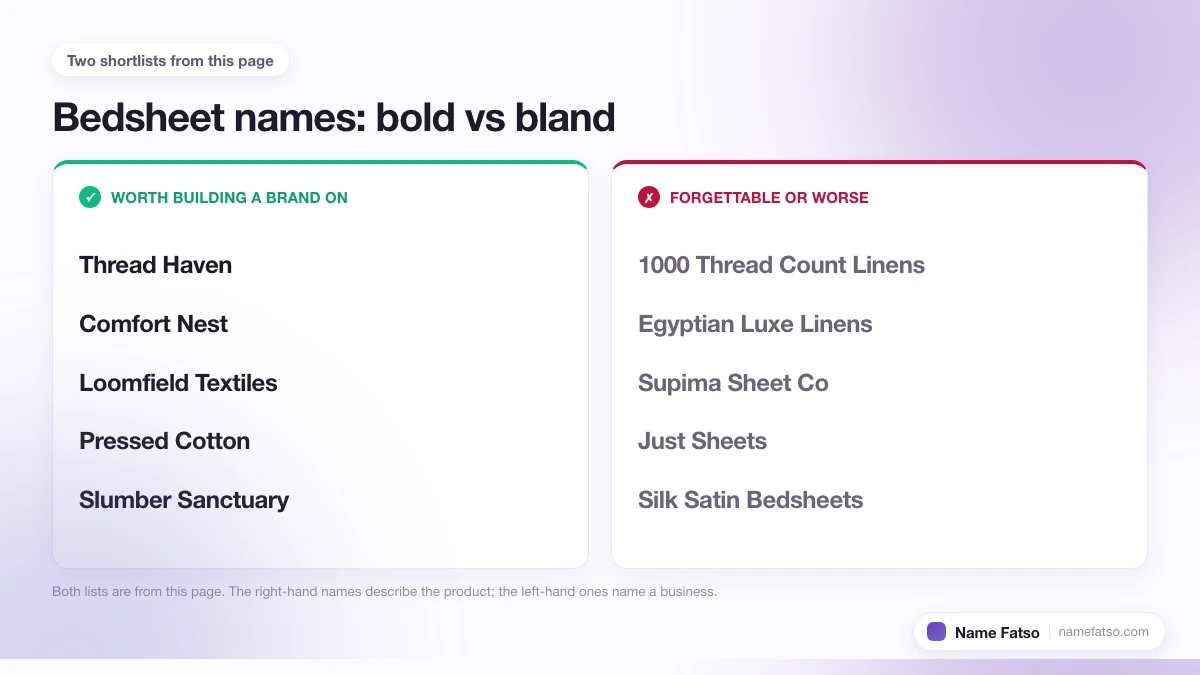
Six tests decide it. Can your label back every fibre word in it, does it keep linen for flax, does it match the weave you stock, does it suit the buyer you actually sell to, does it avoid a number you will be held to, and does it still work when you add duvet covers and towels.
- Thread Haven
- Comfort Nest
- Loomfield Textiles
- Pressed Cotton
- Slumber Sanctuary
- Northweave Textiles
- Tucked In
- Cuddle Co
- 1000 Thread Count Linens
- Egyptian Luxe Linens
- Supima Sheet Co
- Just Sheets
- Silk Satin Bedsheets
- The Bedsheet Shop
Start Your Store Today
Once you've found the perfect name, launch your store with one of these trusted platforms: