



Jelly Business Name Ideas


What a Jelly Business Name Has to Settle First
Two things decide more than taste, and both carry a bill. In American labelling, jelly is a defined product with a fruit to sugar ratio and a solids figure behind it, so the cheerful claim words that generators love are promises about a label you may not be allowed to print. And if your jelly is the dessert, your setting agent is a business decision: gelatin melts at about body temperature and comes from pork or beef, agar and konjac hold up to heat and suit buyers gelatin loses. Settle both of those before you choose a word to fall in love with.
What Separates a Strong Jelly Business Name
Says Which Jelly You Mean
The word covers a fruit spread, a set dessert and a bag of sweets, and the three have different customers. A second word that names the fruit, the dish or the jar tells a caller in one go which business they have reached, which is work the word jelly will never do on its own.
Does Not Claim a Label You Cannot Print
Jelly in American labelling means 45 parts fruit juice to 55 parts sweetener and at least 65 percent soluble solids. Sugar free, no added sugar and all natural are claims with rules behind them. Keep them out of the registered name and you keep the right to print lids before the recipe is finally settled.
Matches the Agent That Sets It
Gelatin melts at about 35 degrees Celsius and comes from pork or beef. Agar sets near room temperature and holds to about 85. One can be delivered on a hot afternoon and sold to vegetarian and halal buyers, the other cannot, and a name built on the wrong one is hard to walk back.
Clears the Jelly Belly Problem
The best known name in this trade is a registered candy mark that soaks up the search results for the word. Anything close enough to borrow that recognition is close enough to be refused, so a jelly name has to earn attention from a flavour, a place or an invented word instead.
Still Fits When Marmalade Arrives
Jar makers add jam, marmalade, fruit butter and a Christmas pepper jelly. Dessert counters add jelly drinks, konjac pouches and cake. A fruit word, a place word or an invented mark carries the next product. A name welded to one recipe has to be thrown away to grow.
Reads Off a Jar Lid and a Delivery Tile
A jelly label is often a small round sticker on a lid, and a dessert listing is a thumbnail on a phone. Both reward two short words and punish anything that needs spelling. Say the name out loud as though you were giving it to a market organiser over the phone, then count the letters on the lid.
Names for a Jam and Jelly Maker
Names for the jar trade: strained fruit jelly, jam, marmalade and fruit butter, made in small batches and sold at a market, a farm stand or a gift shop. These lean on fruit, place and method, because those are what a shopper reads on a small round lid label and what still fits when next season's fruit is different.
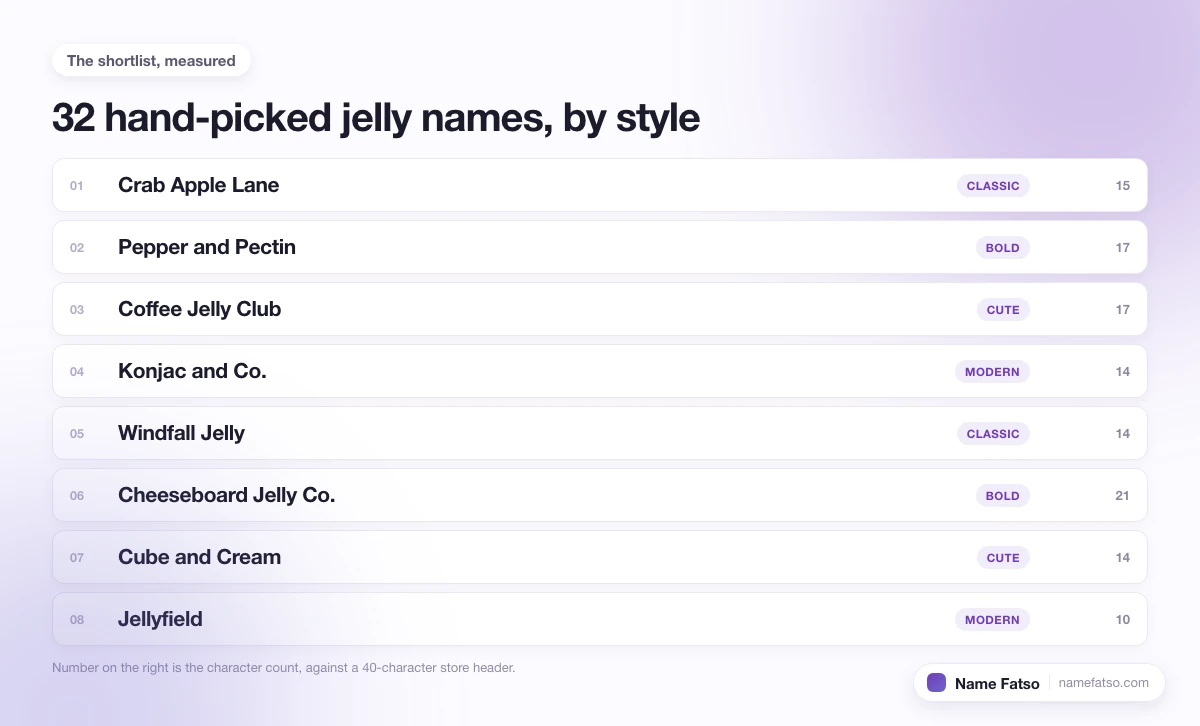
Crab apple is the fruit that sets hardest without added pectin, so the name quietly tells another maker you know your craft while reading as a simple address to everyone else.
Windfall is the orchard word for fruit that has already dropped, which is both where cheap jelly fruit comes from and a tidy story about waste for the card on the stall.
The wide copper pan is the traditional jelly pan, so the name says hand made and small batch without claiming anything a label rule can argue with.
A batch count is an honest scarcity claim and it is memorable precisely because it is odd, which matters when the jar sits beside six other fruit spreads.
Hedgerow fruit means blackberry, elderberry and sloe, the free foraged side of this trade, and the second word keeps the name working when you add marmalade.
A soft set is the one thing a market buyer can test with a spoon, so a name about the set competes on something checkable rather than on purity words nobody can verify.
Most of these businesses legally are a kitchen under a cottage food rule, and saying so is a selling point at a market stall instead of something to disguise.
A place name travels across every fruit you will ever use, carries no label claim, and is short enough for the lid and clean enough to register.
Names for a Pepper Jelly and Savoury Jelly Brand
Pepper jelly is the profitable corner of the jar trade because it sells as a gift and a cheeseboard item at full margin rather than as a breakfast staple. These names tell the shopper it is savoury and hot before they read the ingredients, which is the job a fruit word cannot do. Check your state cottage food list first, because hot pepper jelly is one of the products that sometimes sits outside it.
Names both halves of what is actually in the jar, and the repeated sound makes it stick after one pass at a market table.
Pepper jelly is eaten next to cheese, so naming the occasion rather than the fruit speaks to the gift buyer who has no idea what it tastes like yet.
A number plus the chilli sets an expectation of heat and a recipe, and it leaves you free to change which three without touching the label design.
Says what it is for and how strong it is in four short words, which is about as much as a gift shop shelf card will carry.
Marks you out from the fruit spreads on either side without committing to one pepper, so it still covers onion, tomato and herb jellies later.
The most recognised chilli in the category plus the container, which is a plain descriptive pairing a shopper searches for by name.
Reserve borrows the language of wine and preserves at once, which suits a gift price rather than a market price.
Two verbs from the two halves of the process, short enough for a lid and distinctive enough to register, which most pepper jelly names are not.
Names for a Jelly Dessert Shop or Counter
This is jelly in the British and Asian sense: coffee jelly in cream, gulaman cups, jelly cake, a chiller of cubes. The dish is the search term and the name is read off a delivery tile at thumbnail size, so these are short and say the dessert. If you set with agar or konjac rather than gelatin, say so somewhere, because a lot of your customers are asking.
Coffee jelly is the single most searched dish in this sense of the word, so the name is understood on a delivery app before the photograph has loaded.
Describes how the dessert is actually served and reads as a pairing rather than a product, which suits a counter adding new flavours every month.
Gulaman is the Filipino word for the agar set dessert, so the name both names the dish and signals it is not gelatin, in one word, to the people who care.
Plain English, slightly funny, and it describes the texture that makes a family stop at the chiller, which is who a lot of this gets bought for.
A process line rather than a flavour, so it carries jelly cups, jelly cake and jelly drinks without any of them being in the name.
Says you sell it over a counter rather than in a jar, which is the single distinction a searcher is trying to make when they land on you.
Names the setting agent, which is the vegetarian and halal signal, and ice tells a hot climate buyer the dessert arrives cold and firm.
Two short words that suggest a tall cup you eat through in layers, with nothing in it to limit which dessert you add next.
Names for a Packaged Jelly or Jelly Drink Brand
Packaged jelly cups, jelly drinks and konjac pouches are bought from a listing or a shelf, so the name sits next to a pack shot and has to survive being typed into a marketplace search box. Invented marks do best here because they can be registered and defended, and because the ingredient words are already shared by everyone selling the same thing.
Konjac is searched by name by the people who buy low calorie jelly, so the ingredient does the finding and the Co. keeps it from sounding like a single product.
An invented compound a registry is likely to grant, short enough for a pouch and still obviously about jelly at a glance.
Two ordinary words joined into one mark, which is how a brand gets something distinctive out of the plainest vocabulary in the trade.
Names the format rather than the flavour, which is useful when the same brand carries drinking pouches and spooned cups side by side.
Clarity is what separates a good fruit jelly from a cloudy one, and as one word it reads like a brand instead of a description.
Pack count naming works on a marketplace because the count is what the shopper is comparing, and it makes the listing title do double duty.
Suggests a range rather than one product, which is what a packaged brand needs on day one even if it launches with a single flavour.
Two words about colour and texture, both of which a pack shot can prove, and neither of which is a health or label claim you have to defend.
More Jelly Business Name Ideas
- Jelly Jam
- Sweet Jelly
- Gelatin Delights
- Jellylicious
- Jiggly Treats
- The Jelly Jar
- Jelly Fusions
- Sticky Spoon
- Jelly Joy
- Pepper and Pectin
- Jelly Oasis
- Jelly Heaven
- Yummy Gummy
- Jelly Bean
- Jelly Magic
- Berry Jelly
- Jelly Delights
- Jelly Kingdom
- Jellylicious Sweets
- Jiggly Jelly Co.
- Dreamy Jelly
- Jelly Sensations
- Jelly Haven
- Jellylicious Desserts
- Gooey Delights
- Jelly Junction
- Sweet Jelly Delights
- Jellylicious Treats
- Jelly Gems
- Jelly Bean Boutique
- Jellylicious Creations
- Jelly Delights Co.
- Jelly Dreamland
- Jelly Bliss Bakery
- Jelly Emporium
- Jelly Fusion
- Jellyland Delights
- The Jelly Experience
- Jellyopia
- Jellylicious Delicacies
- Jelly Universe
- Jelly Fusion Co.
- Jellylicious Confections
- Jelly Delight Factory
- The Jolly Jelly
- Sweetlicious Jelly
- Zesty Jelly
- Jelly Bliss
- Jellylicious Delights
- Jelly Bean Dreams
- Jelly Jubilee
- Gourmet Jelly Kingdom
- Funky Flavors Jelly
- Jolly Jellies
- Jellitastic
- Jellies & More
- Jellytopia
- Jelly Palace
- Simply Jelly
- Jelly Delish
- Jelly Royale
- The Jelly Emporium
- Jellyverse
- JellyBox
- JellyBean
- JellyJam
- JellySpot
- JellyPop
- JellyJoy
- JellyBean Junction
- Sweet Jelly Dreams
- Jolly Jelly Co.
- The Jellylicious Shop
- The Jelly Bar
- Jelly Delights Cafe
- Jellylicious Corner
- The Jelly Oasis
- Sweet & Savory Jelly
- Gourmet Jelly Co.
- Jelly Gourmet
- Jelly Beanery
- Jiggly Jelly
- Jelly Jammer
- Jelly Jar Joy
- Yummy Jelly Co.
- The Jelly Kitchen
- Jolly Jelly
- Jelly Lovers
- Divine Jelly Co.
- Jelly Jar Jams
- Jelly Crafters
- The Jelly Factory
- Jelly Berry Farm
- Jelly Bean Kids
- Copper Kettle Jellies
- Gelatinous Goodies
- Jammin' Jelly Shop
- Jiggly Sweets
- Jelly Jam Journey
- Jelly Fizz Drinks
- Jelly World
- Jelly Bean Designs
- The Jelly Jar Co.
- Jelly Bean Express
- The Jellylicious Experience
- Jelly Jamz
- Flavorful Jelly Co.
- JellyBean Bakery
- Gourmet Jelly Jars
- Fabulous Jelly Creations
- Jelly Jammin'
- Perfectly Preserved Jelly
- Heavenly Jelly Delights
- Jelly Wonder
- JellyBean Co.
- Jelly & Co.
- The Jelly Boutique
- Jelly Buzz
- Catchy Jelly
- Jelly Fizz
- Gooey Goodness
- Spoonful of Jelly
- Juicy Jelly
- Berrylicious Jelly
- Delightful Jelly Delights
- Jelly Beans and More
- Bite-Sized Jellies
- Jelly Wonders
- Jelly Delight
- Divine Jellies
- Flavorful Jelly
- Jelly Nest
- Zesty Jellies
- Jelly Sea
- Sweet Jelly Co.
- Jelly Galore
- Jellylandia
- Jelly Delicacy
- Fancy Jelly Boutique
- Jellyberry Bliss
- Gooey Jelly Delights
- Jiggly Jelly Delicacies
- Jelly Joyland
- Jelly Bean Boulevard
- Heavenly Jelly Creations
- The Jelly Spot
- Jelly Paradise
- Sugar & Jelly
- Jelly Island
- Jelly Delightful
- Tasty Jelly Co.
- Jelly Extravaganza
- Blissful Jelly Bites
- The Jolly Jelly Shop
- Sweet Jelly Spot
- Jelly Jazz
- Jelly Bonanza
- Jelly Jet
- Jelly Dream
- Jelly Pop
- Jelly Cloud
- Jelly Avenue
- Jelly Sparkle
- Jelly Bistro
- Jelly Bean Junction
- Jiggly Jelly Delights
- Jelly Jam Deli
- Sticky Fingers Jelly Co.
- Naming a Jelly Business When the Word Means Three Different Trades
- In the United States, Jelly Is a Legal Term and Not Just a Texture
- Taking the Sugar Out Changes the Chemistry, and Sometimes the Law
- Gelatin or Agar Is a Business Decision Before It Is an Ingredient
- Jelly Belly Is Taken, and It Took the Search Results With It
- Choose a Word That Survives Your Second Product
Jelly is three different businesses wearing one word. In the United States it is a strained fruit spread sold in a jar next to the jam and the marmalade, usually made in a home kitchen and sold at a market. In Britain, the Philippines, Japan and most of South East Asia it is the set dessert: coffee jelly in cream, gulaman cups, jelly cake, a tray of cubes in the chiller. On a sweet counter it means jelly sweets and gummies, which is a factory product rather than a kitchen one. Those three are found by different searches, sold through different shelves, and they do not take the same name.
Two facts settle more here than taste does. In American labelling, jelly is a defined product with a fruit to sugar ratio attached, so a brand built on the words sugar free or all natural has promised something the label rules will not let the jar say. And the single most searched phrase containing the word jelly belongs to a California candy company, which means the warmest, most obvious name in the category is both taken and unreachable. This page sorts the names by which of the three trades you are actually in, says which words are a licence rather than an adjective, and explains why the setting agent you choose decides who is allowed to eat what you make.
Naming a Jelly Business When the Word Means Three Different Trades
In the United States, Jelly Is a Legal Term and Not Just a Texture
Fruit jelly has a federal standard of identity. It has to be made from not less than 45 parts by weight of fruit juice to each 55 parts of sweetener, and the finished product has to reach at least 65 percent soluble solids. Miss either number and the jar may not say jelly. It goes out as a fruit spread instead. Jam and preserves sit under the same 45 to 55 rule but keep the crushed pulp or the whole fruit, marmalade carries citrus peel, and fruit butter is cooked down and pureed until it spreads like one. Market customers know the difference and they will tell you about it, so a business called a jelly company that mostly sells jam spends every Saturday being corrected. The expensive version of that mistake is a name that promises sugar free, no added sugar or all natural: those are label claims with rules behind them, and you have printed them on the lid before you found out which of them you are allowed to make.
Taking the Sugar Out Changes the Chemistry, and Sometimes the Law
A normal jelly sets because high methoxyl pectin, fruit acid and a large amount of sugar pull the pectin chains together. Remove the sugar and that set simply never happens. You have to move to low methoxyl pectin, which gels by binding calcium instead of sugar, at a different dose, in a different order, with a different mouthfeel at the end. It is a new product, not a lighter version of the old one. Then the state rules land on top: Missouri, for example, keeps no sugar added, sugar free and hot pepper jams and jellies outside its cottage food allowance, which means the two most tempting things to build a brand around are the two you may not be allowed to make in your own kitchen at all. Read your own state list before you register anything, because a name like Sugar Free Jelly Co. or a brand that is nothing but pepper jelly can leave you holding a trading name for a product you have to send out to a commercial kitchen.
Gelatin or Agar Is a Business Decision Before It Is an Ingredient
If your jelly is the dessert rather than the spread, the setting agent decides who can buy it and how far it can travel. Gelatin melts at about 35 degrees Celsius, which is roughly body temperature, so a gelatin dessert is beautiful on a plate and finished after twenty minutes in a delivery bag or an hour on a summer market stall. Agar has to be boiled to dissolve, sets at around 32 to 40 degrees and does not melt again until about 85, so it rides in a scooter box and holds its edge on a buffet. Gelatin is also normally made from pork or beef, so vegetarian, Jain, Muslim and Jewish buyers will ask what is in it before they order, and in much of Asia the answer is the whole sale. Our own generator will offer you Gelatin Delights. That name tells a large part of your market not to bother, and it locks you out of ever switching to agar or konjac without starting the brand again.
Jelly Belly Is Taken, and It Took the Search Results With It
Jelly Belly is a registered trademark of a long established California candy company, and almost every popular search containing the word jelly is really a search for that brand. Two consequences follow. You cannot register or trade under it, and the soundalikes that naming sessions reach for next, the Jelli Bellis and Jolly Bellys, are both still too close and hard to spell down a phone line. The generated list on this page offered Jelly Belly and Jelly Belly Bakery and both have been taken out, which is why they appear only in the list of names that do not work. The same caution applies to anything that leans on Jell-O or the Jelly Bean Factory. If you want the candy end of this trade, win on a flavour, a place or an invented mark, because the obvious word is spoken for.
Choose a Word That Survives Your Second Product
Almost nobody stays on one line. A jelly maker adds jam, then marmalade, then a fruit butter, then a pepper jelly for the Christmas gift table. A dessert counter adds jelly drinks, then konjac pouches, then a jelly cake for birthdays. A fruit word, a place word, a method word or an invented mark carries all of that. A name welded to one recipe has to be replaced to do it, and the replacement costs you the label plates, the market regulars and whatever search footing you had built. There is one more filter worth knowing before you fall in love with a phrase: a trademark office treats a name that merely describes the goods as too descriptive to register, and Simply Jelly, Gourmet Jelly Co. and Jelly Delights are exactly that. Distinctive is not a style preference here. It is the difference between a mark you own and a trading name anyone can copy.
Jelly Naming Styles Compared
| Style | Example | Best For |
|---|---|---|
| Fruit or Orchard Word | Windfall Jelly | Market and farm stand makers whose jars change with the season |
| Method or Equipment Word | Copper Kettle Jellies | Small batch sellers whose pitch is hand work rather than a flavour |
| Savoury Signal | Pepper and Pectin | Pepper jelly brands sold as a gift and a cheeseboard item |
| Dish Name | Coffee Jelly Club | Cafes and delivery kitchens where the dish is the search term |
| Setting Agent Named | Konjac and Co. | Packaged jelly and jelly drink lines bought by ingredient |
| Invented Mark | Jellyfield | Brands that need a mark a registry will grant and a marketplace will defend |
How to Name a Jelly Maker, a Dessert Counter or a Packaged Jelly Brand
Decide Which Jelly You Mean Before You Choose a Word
In the United States jelly is a strained fruit spread. In Britain and across much of Asia it is the set dessert. On a sweet counter it is gummies. A shopper who wanted coffee jelly and found a jar of grape spread leaves, and so does the one who came for a gift jar and found a dessert cup. Write down which of the three you sell and let the second word in the name say it, because the word jelly on its own will not.
Keep Jelly Belly and Its Soundalikes Out of It
Jelly Belly is a registered candy trademark and it absorbs nearly every popular search that contains the word jelly. You cannot use it, you cannot register a near copy, and the phonetic dodges a naming session reaches for next are both still too close and painful to spell out loud. Our generator offers it anyway, which is a good reminder that a name being available in a list is not the same as it being available to register.
Sugar Free Is a Different Recipe, Not a Different Label
Ordinary jelly sets on high methoxyl pectin, acid and a lot of sugar. Cut the sugar and nothing sets until you switch to low methoxyl pectin, which gels by binding calcium. That is a separate product with its own texture and its own shelf behaviour. Put sugar free in the brand name and you have committed to making it, labelling it correctly and, in several states, making it somewhere other than your own kitchen.
Check Your Cottage Food List Before You Brand One Product
High acid fruit jams and jellies are the classic product allowed under almost every state cottage food rule, which is why so many of these businesses start at a market stall. The exceptions are the fashionable ones. Missouri, for instance, keeps hot pepper jelly and no sugar added jelly out of its allowance. A brand called nothing but Pepper Jelly Co. is a promise you may need a commercial kitchen to keep.
A Gelatin Name Shuts Doors You Will Want Later
Gelatin is normally pork or beef and melts at about 35 degrees Celsius. Agar needs boiling, sets near room temperature and holds to about 85, and konjac is firmer still. That is the difference between a dessert that survives a delivery rider and one that arrives as soup, and between a counter a vegetarian or halal buyer can order from and one they cannot. Name the fruit, the dish or the place, not the setting agent, unless the setting agent is your selling point.
Name the Dish When the Dish Is What People Type
Coffee jelly, gulaman, jelly cups and jelly cake are searched by name and read off a delivery tile at thumbnail size. A dessert counter called Coffee Jelly Club is understood before the photograph loads. A jar business is the reverse: the fruit and the place carry further than the word jelly, because jelly is the category and the fruit is the reason somebody picks your jar up.
Jelly Business Names That Work and Names That Do Not
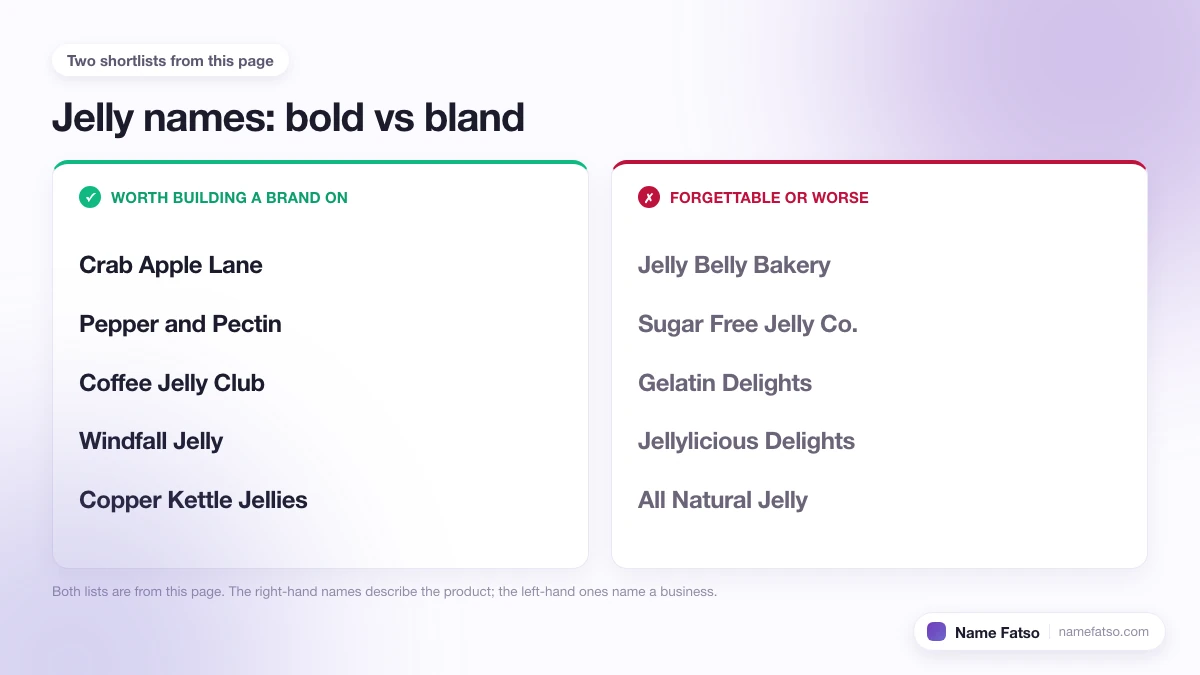
Five tests decide it. Can you register it, does it claim a label rule you can actually meet, does it say which of the three jelly trades you are in, will it still fit when marmalade or jelly drinks join the shelf, and can a customer say it down a phone line without spelling it.
- Crab Apple Lane
- Pepper and Pectin
- Coffee Jelly Club
- Windfall Jelly
- Copper Kettle Jellies
- Gulaman House
- Konjac and Co.
- Cheeseboard Jelly Co.
- Jelly Belly Bakery
- Sugar Free Jelly Co.
- Gelatin Delights
- Jellylicious Delights
- All Natural Jelly
- Simply Jelly
Start Your Store Today
Once you've found the perfect name, launch your store with one of these trusted platforms: