



Herbal Business Name Ideas


What Makes a Great Herbal Business Name
Names for herbal companies tend to draw from three sources: the plants themselves (roots, leaves, bark, bloom, sprig), the tradition of herbal knowledge (apothecary, remedy, botanical, tincture), and the sensory experience of herbs (earthy, green, aromatic, grounded). The most effective herbal brand names blend at least two of these elements into something that feels both natural and considered.
Unique herbal business names avoid the trap of over-used botanical clichés — "Green Leaf" and "Nature's Best" appear on thousands of labels. Instead, they find a specific angle: a heritage herb, a regional plant tradition, or a distinctive preparation method that sets the brand apart.
Key Attributes of Strong Herbal Business Names
Botanical Roots
Names that reference actual plants or plant parts — bark, bloom, root, sprig, thorn, frond — feel grounded and authentic. They signal that your brand knows its ingredients, which matters enormously to buyers of herbal products who are increasingly ingredient-literate.
Heritage and Craft
Words like apothecary, remedy, tincture, and botanical suggest a tradition of careful preparation. They appeal to customers who value old knowledge and slow processes over mass production. These words also tend to be more distinctive than generic wellness language.
Sensory Appeal
Herbal products are experienced through smell, taste, and touch. Names that evoke a sensory impression — "Warm Root", "Wild Bloom", "Smoky Sprig" — create an immediate mental image and make the brand feel tangible before a customer ever tries the product.
Herbal Tea Business Names
A great herbal tea brand name should feel warm, calming, and trustworthy, reflecting the craft behind your blends. Names that hint at botanicals, rituals, or natural origins tend to resonate best with tea drinkers.
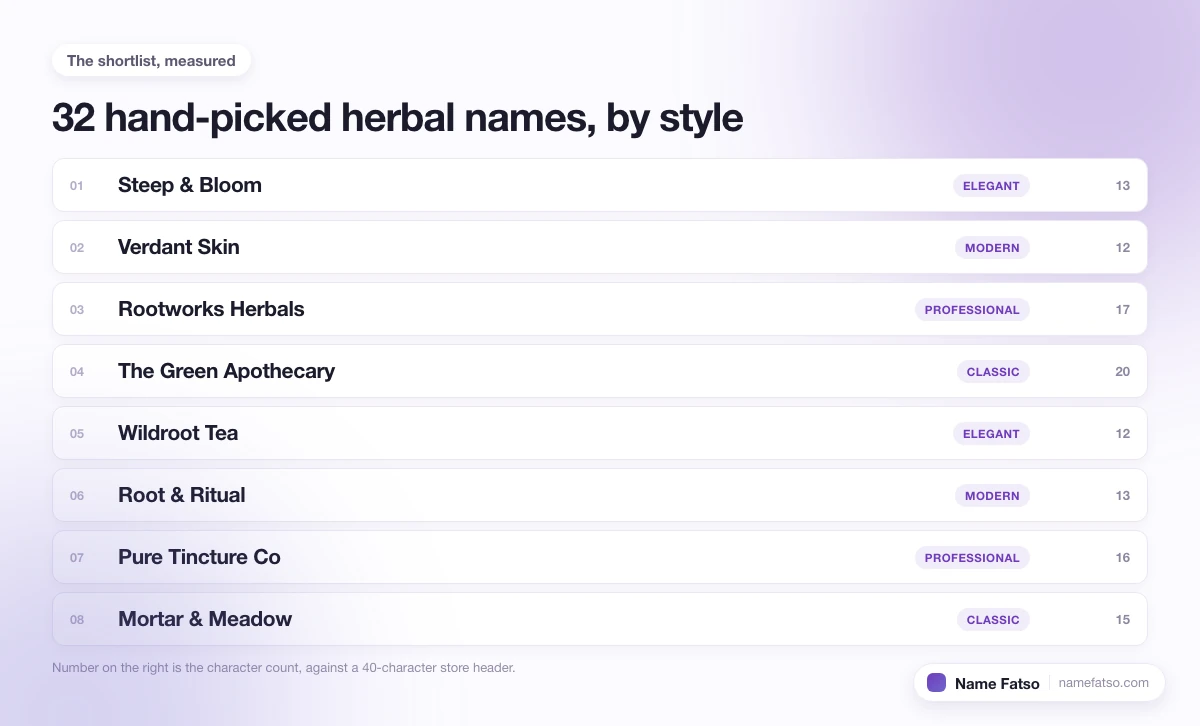
Captures the ritual of tea steeping alongside the natural beauty of flowering herbs.
Suggests untamed, foraged ingredients that give your blends depth and authenticity.
Evokes a quiet, nature-filled space where herbal teas are crafted with care.
Combines floral botanicals with the artisan feel of a small-batch brewing operation.
Paints a picture of open meadows rich with herbs, giving the brand a fresh, pastoral identity.
The woodland imagery of ferns suggests a brand rooted in nature and quiet tradition.
A charming, memorable name that ties delicate wildflowers to the pleasure of a slow tea moment.
Balances rugged natural textures with the refinement of a curated herbal tea range.
Herbal Skincare and Cosmetics Business Names
Herbal skincare brands succeed when their names signal purity, botanical expertise, and a departure from synthetic ingredients. The right name builds trust before a customer ever reads the label.
Verdant signals lush, living greenery, positioning this as a fresh-from-nature skincare line.
Anchors the brand in plant-based origins while nodding to the self-care routine customers are buying into.
Straightforward yet appealing, this name ties botanical ingredients directly to a visible skin result.
References the extraction process behind botanical oils and extracts, lending a sense of craft.
Clover's association with good luck and natural fields gives this cosmetics brand an approachable, clean identity.
The pairing of herbs with morning dew evokes freshness and the kind of gentle hydration customers want.
Combines the science of ingredient transformation with a deep respect for plant-based sources.
Pairs a well-known medicinal herb with a texture that suggests the smooth, luxurious feel of the products.
Herbal Supplements and Remedies Business Names
Supplement and remedy brands need names that project credibility, natural potency, and a grounded approach to wellness. Customers want to feel confident that what they are taking is both effective and responsibly sourced.
Suggests a brand that goes deep into the plant kingdom to source the most effective ingredients.
Direct and clear, this name signals quality extraction processes and nothing added or artificial.
A clever play on the herb thyme and the energy and strength that good supplements provide.
Positions the brand as a serious, quality-first operation with roots in traditional herbal medicine.
The mark imagery suggests certification and quality assurance in a competitive supplement market.
Hawthorn is a well-established medicinal plant, grounding this brand in a specific, credible ingredient.
Signals a science-backed operation that still honors the integrity of whole-plant ingredients.
The pairing of a medicinal herb with the permanence of stone suggests a brand built to last on solid principles.
Herbal Apothecary and Wellness Shop Names
Herbal apothecary businesses blend old-world wisdom with a modern interest in natural healing, and the best names reflect that balance. A good name for this niche feels both timeless and approachable.
A clean, descriptive name that instantly communicates what the shop sells and the natural ethos behind it.
The mortar references traditional preparation methods while meadow keeps the brand grounded in botanical origins.
The wren is a small, resourceful bird, giving this wellness brand a modest, nature-connected personality.
Two aromatic botanicals that evoke warmth and craftsmanship, perfect for a curated wellness shop.
Still suggests calm and intention, while root anchors the brand in its plant-based foundation.
A homey, inviting image that positions the shop as a trusted source of carefully stored, quality botanicals.
Birch trees carry connotations of renewal and cleansing, aligning well with a wellness-first brand identity.
The thistle is a resilient, characterful plant that gives this brand a sense of heritage and quiet confidence.
More Herbal Business Names
- BrookSachet Studio
- WildHollow Brand
- Wildroot & Tea Studio
- Native Tea Studio
- Brew Knoll Brand
- Open Brew Atelier
- LeafHollow Atelier
- BranchWildroot Tea
- Leaf Field Atelier
- Iron Brew Atelier
- Petal Field Brand
- Petal Knoll Studio
- BendTin Tea
- HonestTin Brand
- WildPetal Tea
- Bold Tin Atelier
- SteadBrew Atelier
- CrispBloom Studio
- NorthernBrew Atelier
- Pure Steep Brand
- StreamHollow Brand
- Wildroot North Studio
- Steep Forge Brand
- Wildroot & Tin Atelier
- Sachet Ridge Brand
- HonestTea Brand
- CrestSachet Studio
- SteadTea Tea
- Open Tea Studio
- GroveTea Atelier
- Steep Wildroot Atelier
- True Steep Brand
- SteadBloom Atelier
- GateBrew Studio
- PathTin Brand
- Steep Branch Brand
- CrestTin Studio
- StreamSteep Atelier
- Petal Ridge Brand
- Petal Knoll Brand
- Honest Steep Studio
- Tea Field Brand
- Northern Bloom Tea
- BoldHollow Tea
- HarborBloom Atelier
- HeritageSachet Studio
- BendBloom Atelier
- CrownSteep Studio
- Open Leaf Brand
- PathSteep Studio
- TrailBloom Studio
- PathLeaf Brand
- PureTea Brand
- PetalSteep Atelier
- Steep Wildroot Brand
- KnollWildroot Atelier
- SteadPetal Studio
- Petal Branch Brand
- Crisp Petal Studio
- HeritageBrew Brand
- Open Wildroot Studio
- GateTin Tea
- Hollow Trail Studio
- OpenSachet Tea
- KnollPetal Studio
- CrestSachet Brand
- Brew Trail Brand
- Petal & Brew Atelier
- ForgeBrew Atelier
- Wildroot & Petal Tea
- Bloom & Hollow Studio
- StoneTea Atelier
- CrownBrew Studio
- Bloom Hollow Atelier
- GoldPetal Studio
- True Sachet Studio
- PathPetal Studio
- GateSachet Tea
- Tea Forge Brand
- HonestLeaf Tea
- Brew Ridge Studio
- StreamWildroot Tea
- TrueHollow Atelier
- Iron Steep Atelier
- StoneTin Atelier
- Wild Steep Atelier
- Open Brew Brand
- BrookBrew Brand
- Gold Tin Studio
- SteepSteep Studio
- Crisp Wildroot Atelier
- Iron Tin Studio
- Sachet Branch Tea
- StreamWildroot Brand
- Honest Brew Brand
- Sachet Crown Atelier
- Brew Crown Atelier
- Steep Tin Studio
- HonestHollow Tea
- Hollow Knoll Brand
- Hollow & Sachet Studio
- PathLeaf Tea
- BoldLeaf Studio
- Wildroot & Leaf Brand
- BendHollow Brand
- Hollow Steep Tea
- Wildroot Brew Studio
- HarborTea Brand
- ForgePetal Brand
- Bloom & Tin Studio
- GateWildroot Tea
- Pure Bloom Studio
- Tin Knoll Studio
- PathPetal Atelier
- PureBloom Tea
- Brew Field Studio
- Tin Trail Studio
- GateLeaf Brand
- Brew Crown Brand
- HollowTin Atelier
- Hollow Knoll Atelier
- NorthPetal Tea
- TrailSachet Brand
- Tin Crest Tea
- Hollow Forge Tea
- True Steep Atelier
- HeritageHollow Studio
- Wildroot Forge Studio
- Iron Brew Tea
- Wildroot & Sachet Tea
- WildBloom Studio
- Gold Tea Atelier
- Bloom Crest Atelier
- Leaf Crest Brand
- KnollTin Brand
- NativeSteep Studio
- Northern Bloom Studio
- Northern Sachet Tea
- Petal & Sachet Brand
- Hollow Petal Studio
- PathBrew Tea
- CrestSachet Atelier
- Sachet Stream Brand
- Pure Petal Studio
- TrueWildroot Atelier
- Bloom Stream Atelier
- GatePetal Studio
- BendHollow Atelier
- BendBrew Tea
- NativeSachet Brand
- Honest Wildroot Studio
- Tin Bend Atelier
- WildrootSachet Atelier
- Leaf North Brand
- SteepLeaf Atelier
- Wildroot Branch Studio
- Wildroot Crest Tea
- Brew Branch Atelier
- Petal Wildroot Atelier
- Bold Tin Brand
- StreamPetal Atelier
- Leaf Bend Studio
- Pure Steep Tea
- KnollBrew Atelier
- PetalPetal Studio
- StreamPetal Brand
- NorthernLeaf Studio
- Brew & Tin Atelier
4 Tips for Naming Your Herbal Business
Avoid the Most Overused Botanical Words
"Green", "Nature", "Natural", "Organic", and "Herb" appear in tens of thousands of business names. They're nearly impossible to trademark and hard to rank for. Go one level deeper — choose a specific plant (ginger, elderberry, turmeric, ashwagandha), a preparation method (tincture, infusion, decoction), or a sensory quality (earthy, smoky, bitter) to make the name distinctive.
Consider Regulatory Implications
If your business makes health claims — and your name implies medicinal benefits — you may face restrictions from the FDA, FTC, or equivalent bodies in your country. Names like "Cure Root" or "Remedy Plus" can attract regulatory scrutiny. A name that references the plant or the experience ("Wild Root Co".) is safer than one that promises a health outcome.
Think About How the Name Ages
Herbal wellness trends shift quickly — what's popular today (mushroom coffee, adaptogens) may feel dated in a few years. A name tied to a specific trend rather than a timeless concept can require costly rebranding. Names built around a place, a person, or a plant's basic identity tend to age better.
Test It on Your Target Customer
The gap between how a herbal brand name sounds to a founder versus how it reads to a first-time customer is often wide. Show your shortlist to three to five people in your target demographic — someone who already buys herbal teas, supplements, or plant-based skincare. Their instinctive reaction to each name is more reliable than any internal debate.