



English Course Business Name Ideas


Four Kinds of English Course, Four Kinds of Name
Each buyer is looking for a different signal. Exam candidates want proof of results and a serious tone. Adult conversation learners want to feel safe. Families want warmth and a sense that the basics are covered. Companies want something that looks credible on an invoice. A name that tries to speak to all four usually says nothing clear to any of them, so pick the group that will bring most of your income and name for them.
What Separates an English Course Name That Lasts
Speaks to One Learner
The strongest names are clear about who the course is for. Exam candidates, nervous adult speakers, families and companies should each recognise themselves in a single read.
Matches the Local Search Term
Spoken English, ESL and English school mean the same thing to a teacher and different things to a searcher. The best names sit comfortably next to the phrase your market uses.
Free of Trademarks and Restricted Words
No exam brand names, and no University or Institute unless you have checked the rules. A name you cannot be forced to change is worth more than one that sounds grander.
Easy for Learners to Say
Your students repeat the name to friends in their second language. Plain words travel further than puns, invented spellings or long strings of syllables.
Promises Results Without a Date
Score, Progress, Path and Edge suggest improvement. Days and weeks invite complaints when a learner's timetable and yours do not match.
Works as an Online Handle
Short enough to be free on YouTube, Instagram and a course platform, and spelled the way it sounds, so learners who hear it in a video can find it.
English Course Names for Exam Preparation
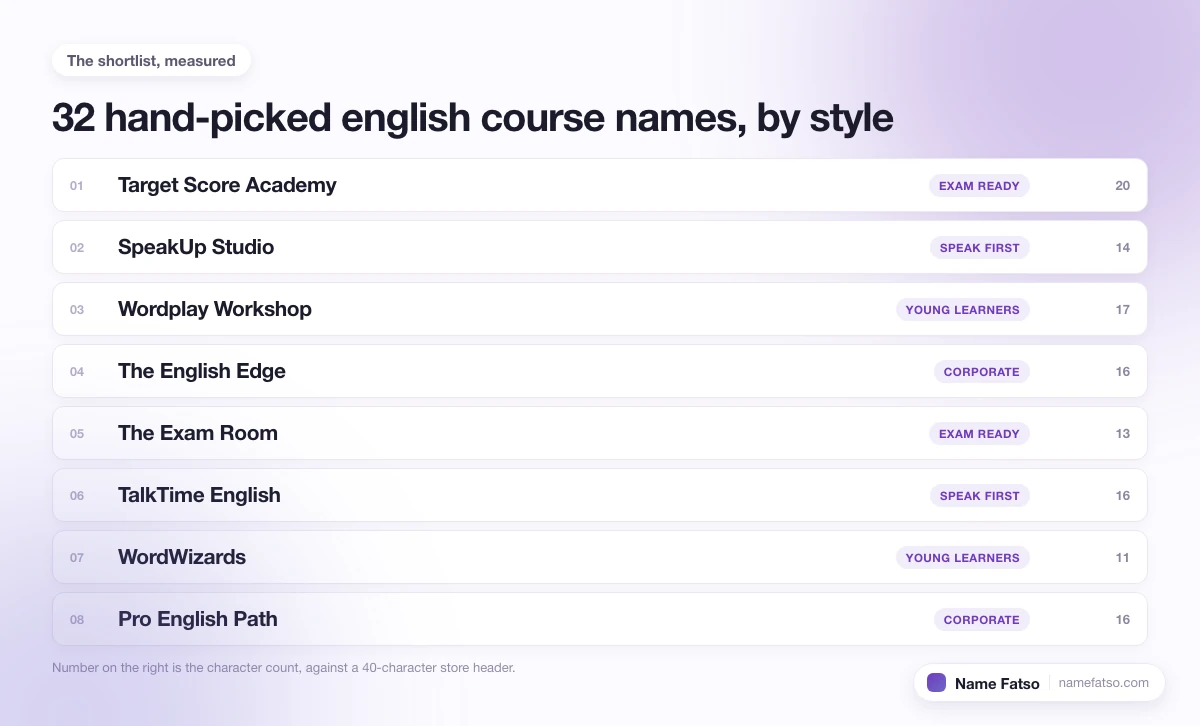
For centres coaching students toward a score. These sound serious and results focused without using any test maker's trademark.
Says exactly what an exam candidate is paying for, and works for any test you add later.
Plain and calm, and suggests practice under real test conditions.
Speaks to the student who needs a minimum score for a visa or an offer letter.
Candidates talk about moving up a band, so the name uses their own language.
Short, serious and easy to put on a results board outside the centre.
Promises a clear result rather than a fast one, which keeps it honest.
Works for exam and general levels alike, so the name survives a change of focus.
Tells a student the course ends when they are ready, not when the calendar says.
English Course Names for Spoken English and Conversation
For adults who know some English and want to use it out loud. These lean on speaking and confidence, and keep grammar out of sight.
Studio sounds relaxed, and Speak Up names the exact fear these learners have.
Promises time spent talking, which is what conversation learners say they never got.
Simple enough to say in a first lesson and easy to recommend to a friend.
Short and modern, and works as a handle for an online speaking course.
Suits a centre that teaches interview and workplace speaking as well as daily talk.
Suggests active classes where everyone talks, not rows of silent note takers.
Speaks to confidence, which is what adult speakers are actually buying.
A playful name that still promises steady practice, good for group classes.
English Course Names for Kids
For phonics, reading and early grammar classes where a mum or dad is choosing. Warm, playful and reassuring about the basics.
Tells a mum or dad learning will feel like play, and a kid will happily say it.
Makes vocabulary sound like a skill worth showing off, which kids love.
Grammar reassures families, and the galaxy keeps it fun for the kid.
Short and playful, and fits a reading programme or an online kids channel.
Instantly signals a kids' class and flatters the family's ambitions.
Promises reading done properly, which is the first thing most families ask about.
Suits a class that teaches through stories and grows level by level.
Fun for kids without sounding babyish, so it lasts as students get older.
English Course Names for Business English
For trainers selling to companies and professionals. These read well on a proposal and an invoice.
Pitches English as a competitive advantage, which is how a manager justifies the budget.
Professional in tone and promises progress without naming a deadline.
Names the outcome a company wants: staff who write and speak clearly.
Short and credible, and easy to fit on a training certificate.
Calm and established, and leaves room to add other languages later.
Suits a trainer focused on meetings, calls and negotiations.
Tells a buyer at once that this is English for working professionals.
Speaks to the writing side of business English, from emails to reports.
More English Course Business Name Ideas
- LinguaLearn
- Fluent Academy
- SpeakEasy Language School
- Grammar Guru
- English Mastery
- WordSmith Language Institute
- English Express
- TalkTheTalk
- Language Lab
- AngloSkills
- VerbVibe
- LinguaLink
- The English Edge
- LinguaLabs
- Grammar Galore
- Talk Smart Language Center
- WordWizards
- English Venture
- Fluent in Five
- ESL Excellence
- Lingua Loft
- SpeakUp Language Academy
- GrammarZone
- WordWonder
- English Emporium
- Fluentify Academy
- Lingua Mastery Institute
- VerbalVue Learning
- GrammarGenius Hub
- Polyglot Path Institute
- Envision English Institute
- Language Lighthouse Academy
- Express Fluency School
- VerbVibe Learning Center
- LinguaLux School
- Engage English Institute
- Linguistic Leap Academy
- Wordwise Workshop
- SpeakUp Studio
- Grammar Gurus School
- Dialogue Dynamics Academy
- Lingualift Learning
- Language Loft Institute
- WordWise Wisdom Center
- Enrich English Academy
- VerbVault Institute
- FluentFocus School
- Communicate Clear Academy
- Express English Excellence
- TalkTime Training
- LinguaLink Learning Center
- FluentFuture Academy
- GrammarGenius Institute
- English Express Learning
- LanguageLab School
- ProEnglish Progress
- LinguaMinds Academy
- VerbVoyage Institute
- GrammarGateway Learning Center
- EnglishEase Education
- Literacy Loft Academy
- TranslateTrust Institute
- CommaConnections Education
- SpeakStrong Studio
- LinguaLeap Learning
- GrammarGroove Academy
- ReadRight Institute
- ProsePros Academy
- LanguageLaunch Education
- EnglishEdge Learning Center
- NarrativeNav Institute
- VerbVault Academy
- LiteraryLighthouse Learning
- GrammarGurus Academy
- FluentAcademy
- LinguaBoost
- Verbiage Studio
- Glossary Genius
- Grammar Groove
- Lexicon Loft
- Syntax Mastery
- VocabVerse
- LinguaLink Institute
- English Evolve
- Grammar Galaxy
- Language Loft
- Verb Vantage
- English Essence
- Learn Lingo Lab
- Linguistic Leap
- Prose Proficiency
- Wordplay Workshop
- Grammar Gurus
- Lingua Luxe
- SpeakEasy Studios
- Syntax Sphere
- English Empower
- Grammar Genie Academy
- Verb Voyage
- Fluent Avenue Academy
- Grammar Guru Institute
- Language Loft Learning
- Pro English Path
- Verbal Velocity Center
- Linguistic Leap Hub
- English Excellence Institute
- The English Maven
- Speaking Success School
- Fluent Future Academy
- Language Mastery Institute
- Grammar Genius Academy
- Verbally Varsity
- Talk Time Institute
- English Empowerment Hub
- The Linguistic Edge
- Fluent Focus Academy
- Grammar Goals Institute
- Communication Craftsmen
- English Express Lab
- Language Leap Studio
- Speak Well School
- Linguistic Leaders Hub
- The Fluency Factory
- English Evolution Institute
- FluentWise
- The Language Hub
- GrammarGenius
- Express English
- ProLingo
- VerbVoyage
- Linguify
- FastForward English
- NuanceNest
- Accelang
- Grammar Grind
- LinguaLeap
- TalkTime English
- Elite English Education
- SentenceSense
- FluentEdge
- Beacon Language
- Verbiage Vibes
- The Grammar Guild
- English Orbit
- Engage English
- SwiftSpeak
- Converse Mastery
- LinguaBoost Academy
- Fluency Forge
- Grammar Wizardry
- VerbVerse Academy
- Language Leap Institute
- Syntax Space
- Easy English Emporium
- Grammar Dive
- English Excellence Hub
- Verb Vortex Academy
- FluentU
- Linguify Academy
- English Edge Institute
- Grammar Guru Hub
- Verb Voyage Academy
- LinguaMastery Institute
- Amplify English
- VerbVision Academy
- English Evolve Hub
- Verb Vault Academy
- Enlighten English Institute
- Naming an English Course Around the Learner, the Market and the Rules
- Keep Exam Brand Names Out of Your Business Name
- Words Like University and Institute Can Need Permission
- Grammar Sells to Parents and Scares Adults
- Speed Promises Turn Into Refund Requests
- Native Speaker Is a Hiring Promise, Not a Brand
- Online Courses Need a Name That Works as a Handle
An English course is not one business. A centre that gets students through a band score on an exam, a studio where shy adults finally talk, a phonics class for six year olds and a trainer who teaches sales teams to write clear emails all sell English, and they sell it to four different buyers who read names in four different ways. The name that fills an exam batch sounds cold to a family choosing a phonics class, and the playful name they love tells an exam candidate you are not serious. So decide which learner pays you before you decide what sounds good.
The second thing to settle is the word your market searches for. In India, Bangladesh and Sri Lanka people look for spoken English classes. In the United States the term is ESL, and in much of Europe and East Asia schools advertise English as a foreign language or simply English school. A name and a signboard built around the phrase your learners actually type will be found. One built around a phrase they never use will rely on word of mouth alone.
Naming an English Course Around the Learner, the Market and the Rules
Keep Exam Brand Names Out of Your Business Name
The fastest growing English courses are exam courses, and the obvious move is to put the exam in the name: an IELTS Academy, a TOEFL Point, a PTE Zone. Those test names are registered trademarks owned by the organisations that run the tests, and they protect them. A business name built on one can draw a complaint from the trademark owner, trouble with a domain, or rejected ads on platforms that check trademark use. Worse, the name suggests you are an official test centre, which is a separate status the test owners grant. Put the exam in your course titles and your class timetable, where describing what you teach is normal, and keep the business name your own. Names like Target Score Academy or The Exam Room say exam preparation without borrowing anyone else's brand.
Words Like University and Institute Can Need Permission
Institute, College, Academy and University all make a small centre sound established, but they are not equal. In the UK, Institute and University are on the Companies House list of sensitive words, so a company name that uses them needs justification or approval. In India, the University Grants Commission restricts the word University to bodies that are legally recognised as one. Academy and School are usually safe almost everywhere. Check the rules in your own country before you print anything, because changing a registered name later costs more than choosing a plainer one now.
Grammar Sells to Parents and Scares Adults
Ask adults why they never finished an English course and many will describe grammar drills that left them knowing the rules and still unable to speak. Those are the people who sign up for spoken English and conversation classes, and a name with Grammar in it reminds them of exactly what they are trying to escape. Families are the opposite. For a young learner, Grammar in the name reassures them that the basics are being taught properly. Use Grammar, Phonics and Reading for kids' programmes. For adult fluency courses, lean on Speak, Talk and Confidence instead.
Speed Promises Turn Into Refund Requests
Fluent in Five, English in 30 Days and Speak in a Week all look strong on a flyer. The problem is that learners take them literally. Moving up one level on the common European scale, say from B1 to B2, usually takes well over a hundred hours of guided study, and few adults with jobs manage that in a month. When the promised fluency does not arrive, the name is what they quote in a bad review. A name that promises a direction, like Pro English Path, survives longer than one that promises a deadline.
Native Speaker Is a Hiring Promise, Not a Brand
Native English or Native Speakers in a name tells every student that every teacher grew up speaking English. That commits you to a hiring policy for as long as you keep the name, and in several countries advertising for teachers by native status is now treated as discriminatory. Many of the best teachers in any market learned English as adults and understand learner mistakes from the inside. If teacher quality is your selling point, say it through results and reviews, not through a word that limits who you can employ.
Online Courses Need a Name That Works as a Handle
Most English teachers now sell at least part of their teaching online, on YouTube, Instagram or a course platform. A long name like Linguistic Leap Learning Academy gets shortened by students anyway, so pick the short version yourself and check that it is free as a handle on the platforms you will use. Avoid spellings that only work in writing. A learner who hears your name in a video and cannot spell it will never find your page.
English Course Naming Styles Compared
| Style | Example | Best For |
|---|---|---|
| Results Name | Target Score Academy | Exam preparation centres whose students judge a course by the score at the end |
| Speaking Name | SpeakUp Studio | Spoken English and conversation classes for adults who already know the rules but lack confidence |
| Playful Name | Wordplay Workshop | Kids' phonics and reading programmes where the mum or dad is choosing |
| Professional Name | The English Edge | Business English trainers selling to companies and HR teams |
| Plain Descriptive Name | Speak Well School | Local centres that rely on walk ins and want the sign to explain itself |
| Short Brandable Name | FluentEdge | Online teachers who need one short handle across video, social and a course platform |
How to Name an English Course Students Will Trust
Name for the Learner Who Pays
Exam candidates, adult speakers, families and companies respond to different words. Choose the group that brings in most of your fees and make the name obvious to them, even if it means the others take a second look.
Use the Phrase Your Market Searches
Spoken English is the common search in South Asia, ESL in the United States, and English school in much of Europe and East Asia. Put the phrase your learners actually type on your sign and listing, even if the brand name itself is shorter.
Keep Test Names in the Timetable
IELTS, TOEFL and PTE are trademarks owned by the test makers. Use them to describe a course, not as part of your business name, and you avoid complaints and look independent rather than borrowed.
Check Restricted Words First
University, Institute and sometimes College need permission or recognition in some countries. Academy and School are usually free to use. Check before you register, print or buy a domain.
Promise a Direction, Not a Deadline
Names that promise fluency in days get quoted back in reviews when it does not happen. Words like Path, Next Level or Progress promise movement without a date you cannot meet.
Make It Easy to Say and Spell
Your students are still learning English. A name full of puns or clever spellings is hard for them to repeat to a friend or type into a search bar, and referrals are how most language schools grow.
English Course Names That Work and Names That Backfire
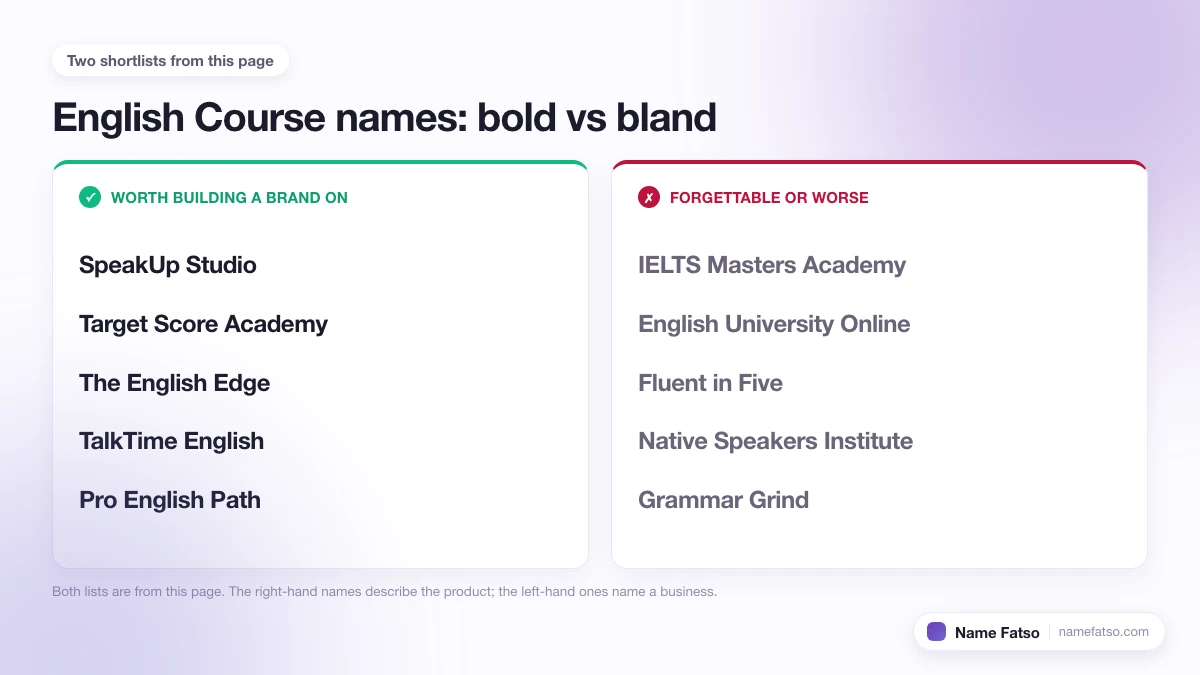
The good names tell one kind of learner what they get and stay easy to say. The weak names borrow a trademark, use a restricted word, promise a deadline, limit who you can hire, or remind adult learners of the drills they hated.
- SpeakUp Studio
- Target Score Academy
- The English Edge
- TalkTime English
- Pro English Path
- Wordplay Workshop
- Engage English
- Speak Well School
- IELTS Masters Academy
- English University Online
- Fluent in Five
- Native Speakers Institute
- Grammar Grind
- Accelang
Start Your Store Today
Once you've found the perfect name, launch your store with one of these trusted platforms: